In high-precision robotics, even fractions of a millimeter matter. One small misalignment in your robot’s Tool Center Point (TCP) can lead to a cascade of issues: missed welds, off-spec cuts, or failed inspections. TCP calibration isn’t just a best practice; it’s a necessity.
The Cost of an Inaccurate TCP
When the tool tip isn’t precisely defined, your robot might “think” it’s aligned correctly while producing inconsistent results. Imagine a robot arm off by just 0.5mm performing a precision weld on an EV battery pack. The cost of rework and scrap could soar.
What Causes TCP Drift?
- Tool Wear or Damage: Minor dents or abrasions alter the tip.
- Changeovers: New tools often don’t match the exact position of the previous.
- Thermal Expansion: Heat subtly shifts the tool’s geometry.
Manual vs. Automated Calibration
Traditional calibration relies on operator skill and manual inputs. It’s time-consuming and prone to human error. Automated calibration, like Dynalog’s systems, uses lasers or vision systems to detect and correct TCP deviations in minutes.
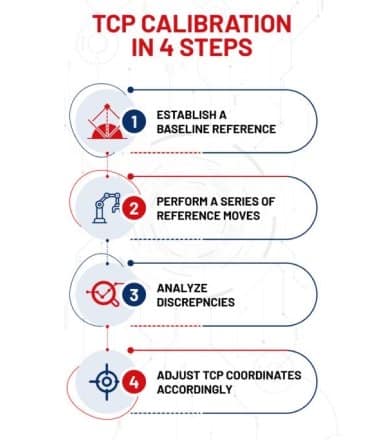
Calibration in 4 Steps:
- Establish a baseline reference.
- Perform a series of reference moves.
- Analyze discrepancies.
- Adjust TCP coordinates accordingly.
The Dynalog Difference
Dynalog’s solutions integrate seamlessly into your workflow, offering high-speed, high-precision TCP calibration without taking robots offline. One customer saw a 12-micron accuracy improvement and reduced downtime by 18%.
Don’t let a minor error cause major failures. Stay aligned, stay ahead.