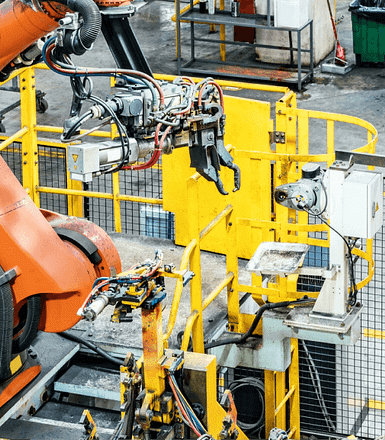
Ensuring calibration is done at key times will extend the lifespan of the robot. Failure to calibrate at these key times can lead to increased errors, inconsistent output quality, and potential breakdowns, which can disrupt operations and incur additional costs.
Here are some key moments when robot calibration is particularly important:
Initial Setup: When the robot is first installed or set up, calibration should be performed. This establishes a baseline for its accuracy and ensures that it starts with the correct settings.
Post-Maintenance or Repairs: After any maintenance or repairs, recalibration is necessary. Even minor changes, such as replacing a part or tightening a joint, can affect the robot’s accuracy.
Change in Operating Conditions: If the operating environment significantly changes, such as a shift from a controlled indoor environment to an outdoor environment with varying temperatures or alterations in the workspace layout, recalibration may be needed to account for these factors.
Before Starting a New Task: When a robot is switched to a new task that requires a different level of precision or involves various tools, recalibration ensures it performs accurately for the new task requirements.
Regular Intervals: Regular, scheduled calibrations are essential for long-term accuracy. The frequency depends on the robot’s usage and the precision requirements of its tasks. This could be monthly, quarterly, or annually, based on the manufacturer’s recommendations and operational needs.
After Significant Wear and Tear: Recalibration is necessary to maintain accuracy if the robot has been in heavy use and shows signs of wear, such as increased vibration or reduced precision. Over time, mechanical parts can shift or degrade, affecting performance.
Following Software Updates: Major updates to the robot’s control software or firmware might impact its performance or calibration settings, so recalibration ensures that the robot operates correctly with the new software.
Why Absolute Accuracy Matters in Robot Calibration
Engineers and technicians play a crucial role in achieving absolute accuracy in robot calibration, a task that is essential for several reasons: Without absolute accuracy in robot calibration, the consequences can be severe. Robots may not perform their functions with the necessary precision, consistency, and reliability, leading to safety hazards, reduced efficiency, and compromised quality. This underscores the importance of accurate calibration, which directly impacts safety, efficiency, quality, and overall system performance.
Precision in Tasks: Robots are often used in applications requiring high precision, such as in manufacturing, medical surgeries, or assembling intricate electronics. Accurate calibration ensures that the robot performs its tasks with the exact precision needed.
Consistency and Reliability: Calibration impacts a robot’s ability to perform tasks consistently over time. Accurate calibration minimizes errors and variability, leading to more reliable operations and reducing the likelihood of defects or failures.
The impact of accurate calibration on safety cannot be overstated. In safety-critical environments, such as robotics used for handling hazardous materials or medical procedures, absolute accuracy is essential to prevent accidents or injuries. Accurate calibration is the key to ensuring that robots operate within safe parameters, underscoring the gravity of your work.
Efficiency: Accurate calibration helps optimize a robot’s performance, therefore reducing material waste.
Quality Control is not just a task, it’s a responsibility. In manufacturing, for example, absolute accuracy in calibration is crucial. It helps maintain the quality standards required for high-quality products, a responsibility that falls on your shoulders.
Integration with Other Systems: Robots often work in conjunction with other automated systems and processes. Accurate calibration ensures that robots can seamlessly integrate and interact with these systems, facilitating smooth and effective operations.
Data Accuracy: Many robotic systems collect and analyze data as part of their operation. Absolute accuracy in calibration ensures that the data collected is reliable and reflects the true state of the system, which is important for diagnostics and further analysis.
We collect cookies to analyze our website traffic and performance; we never collect any personal data.
Functional
Always active
The technical storage or access is strictly necessary for the legitimate purpose of enabling the use of a specific service explicitly requested by the subscriber or user, or for the sole purpose of carrying out the transmission of a communication over an electronic communications network.
Preferences
The technical storage or access is necessary for the legitimate purpose of storing preferences that are not requested by the subscriber or user.
Statistics
The technical storage or access that is used exclusively for statistical purposes.The technical storage or access that is used exclusively for anonymous statistical purposes. Without a subpoena, voluntary compliance on the part of your Internet Service Provider, or additional records from a third party, information stored or retrieved for this purpose alone cannot usually be used to identify you.
Marketing
The technical storage or access is required to create user profiles to send advertising, or to track the user on a website or across several websites for similar marketing purposes.